
LC-HRMS Metabolite Profiling, Antioxidant, and α-Glucosidase Inhibitory Activities of Averrhoa bilimbi L. Fruit Extracts by Maceration and Ultrasound-Assisted Extraction

Article Sidebar
-
α-Glucosidase inhibition, Antioxidant activity, Averrhoa bilimbi, LC-HRMS, Ultrasound-assisted extraction
Abstract
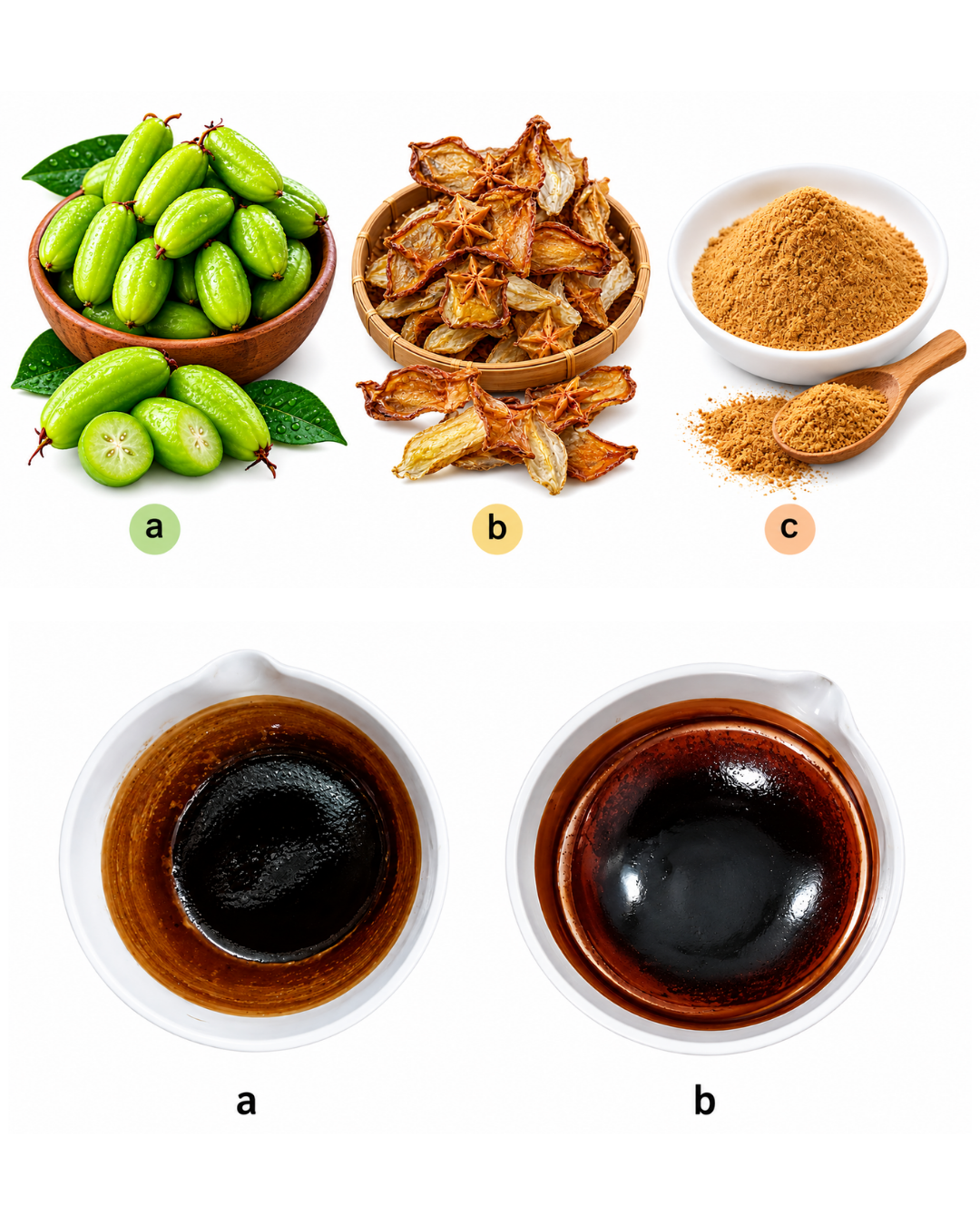
Bilimbi fruit (Averrhoa bilimbi L.) contains bioactive compounds with antioxidant and α-glucosidase inhibitory potential. This study compared 70% ethanolic extracts prepared by maceration and ultrasound-assisted extraction (UAE) in terms of yield, total phenolic content (TPC), total flavonoid content (TFC), DPPH radical-scavenging activity, α-glucosidase inhibition, and LC-HRMS metabolite profiles. Maceration produced a higher yield than UAE (16.23% vs. 11.16%), whereas TPC and TFC were comparable. UAE showed lower DPPH IC₅₀ (37.06 ± 0.27 vs. 51.59 ± 0.21 µg/mL) and α-glucosidase IC₅₀ (23.94 vs. 33.45 µg/mL) than maceration. LC-HRMS yielded 24 tentative or probable metabolite annotations, of which seven were selected for focused interpretation. Because each extraction method was performed once and analytical measurements were technical replicates, between-method differences are descriptive. LC-HRMS findings were qualitative and do not establish quantitative enrichment or compound-specific causality.
Full text article
References
Alhassan, A. M., & Ahmed, Q. U. (2016). Averrhoa bilimbi Linn.: A review of its ethnomedicinal uses, phytochemistry, and pharmacology. Journal of Pharmacy and Bioallied Sciences, 8(4), 265–271. https://doi.org/10.4103/0975-7406.199342
Alseekh, S., Aharoni, A., Brotman, Y., Contrepois, K., D’Auria, J., Ewald, J., Ewald, J. C., Fraser, P. D., Giavalisco, P., Hall, R. D., Heinemann, M., Link, H., Luo, J., Neumann, S., Nielsen, J., de Souza, L. P., Saito, K., Sauer, U., Schroeder, F. C., … Fernie, A. R. (2021). Mass spectrometry-based metabolomics: A guide for annotation, quantification and best reporting practices. Nature Methods, 18, 747–756. https://doi.org/10.1038/s41592-021-01197-1
Arambas, J., & Vidakovic, M. (2022). Oxidative stress-mediated beta cell death and dysfunction as a target for diabetes management. Frontiers in Endocrinology, 13, 1006376. https://doi.org/10.3389/fendo.2022.1006376
Aryal, S., Baniya, M. K., Danekhu, K., Kunwar, P., Gurung, R., & Koirala, N. (2019). Total phenolic content, flavonoid content and antioxidant potential of wild vegetables from Western Nepal. Plants, 8(4), 96. https://doi.org/10.3390/plants8040096
Brand-Williams, W., Cuvelier, M. E., & Berset, C. (1995). Use of a free radical method to evaluate antioxidant activity. LWT - Food Science and Technology, 28(1), 25–30. https://doi.org/10.1016/S0023-6438(95)80008-5
Chang, C. C., Yang, M. H., Wen, H. M., & Chern, J. C. (2002). Estimation of total flavonoid content in propolis by two complementary colorimetric methods. Journal of Food and Drug Analysis, 10(3), 178–182.
Chemat, F., Rombaut, N., Sicaire, A. G., Meullemiestre, A., Fabiano-Tixier, A. S., & Abert-Vian, M. (2017). Ultrasound assisted extraction of food and natural products: Mechanisms, techniques, combinations, protocols and applications. A review. Ultrasonics Sonochemistry, 34, 540–560. https://doi.org/10.1016/j.ultsonch.2016.06.035
Chemat, F., Vian, M. A., & Cravotto, G. (2012). Green extraction of natural products: Concept and principles. International Journal of Molecular Sciences, 13(7), 8615–8627. https://doi.org/10.3390/ijms13078615
Dirir, A. M., Daou, M., Yousef, A. F., & Yousef, L. F. (2022). A review of alpha-glucosidase inhibitors from plants as potential candidates for the treatment of type-2 diabetes. Phytochemistry Reviews, 21(4), 1049–1079. https://doi.org/10.1007/s11101-021-09773-1
Genitsaridi, I., Salpea, P., Salim, A., Sajjadi, S. F., Tomic, D., James, S., Thirunavukkarasu, S., Issaka, A., Chen, L., Basit, A., Luk, A. O. Y., Ma, R. C. W., Mbanya, J. C., Ramachandran, A., Wild, S. H., Duncan, B. B., Boyko, E. J., & Magliano, D. J. (2026). 11th edition of the IDF Diabetes Atlas: Global, regional, and national diabetes prevalence estimates for 2024 and projections for 2050. The Lancet Diabetes & Endocrinology, 14(2), 149–156. https://doi.org/10.1016/S2213-8587(25)00299-2
Gülçin, İ., & Alwasel, S. H. (2023). DPPH radical scavenging assay. Processes, 11(8), 2248. https://doi.org/10.3390/pr11082248
Hadidi, M., Liñán-Atero, R., Tarahi, M., Christodoulou, M. C., & Aghababaei, F. (2024). The potential health benefits of gallic acid: Therapeutic and food applications. Antioxidants, 13(8), 1001. https://doi.org/10.3390/antiox13081001
Harborne, J. B. (1998). Phytochemical methods: A guide to modern techniques of plant analysis (3rd ed.). Chapman & Hall.
Kashtoh, H., & Baek, K. H. (2022). Recent updates on phytoconstituent alpha-glucosidase inhibitors: An approach towards the treatment of type two diabetes. Plants, 11(20), 2722. https://doi.org/10.3390/plants11202722
Kumar, J., & Berlin, S. V. M. (2017). Phytochemical profile and free radical nitric oxide (NO) scavenging activity of Averrhoa bilimbi L. fruit extract. 3 Biotech, 7(1), 85. https://doi.org/10.1007/s13205-017-0678-9
Kumar, K., Srivastav, S., & Singh, V. (2021). Ultrasound assisted extraction (UAE) of bioactive compounds from fruit and vegetable processing by-products: A review. Ultrasonics Sonochemistry, 70, 105325. https://doi.org/10.1016/j.ultsonch.2020.105325
Liao, J., Guo, Z., & Yu, G. (2021). Process intensification and kinetic studies of ultrasound-assisted extraction of flavonoids from peanut shells. Ultrasonics Sonochemistry, 76, 105661. https://doi.org/10.1016/j.ultsonch.2021.105661
Ministry of Health of the Republic of Indonesia. (2022). Suplemen I Farmakope Herbal Indonesia Edisi II. Ministry of Health of the Republic of Indonesia.
Pan, G., Lu, Y., Wei, Z., Li, Y., & Li, L. (2024). A review on the in vitro and in vivo screening of α-glucosidase inhibitors. Heliyon, 10(18), e37467. https://doi.org/10.1016/j.heliyon.2024.e37467
Proença, C., Freitas, M., Ribeiro, D., Oliveira, E. F. T., Sousa, J. L. C., Tomé, S. M., Ramos, M. J., Silva, A. M. S., Fernandes, P. A., & Fernandes, E. (2017). α-Glucosidase inhibition by flavonoids: An in vitro and in silico structure–activity relationship study. Journal of Enzyme Inhibition and Medicinal Chemistry, 32(1), 1216–1228. https://doi.org/10.1080/14756366.2017.1368503
Setyawan, H. Y., Sukardi, S., & Nareswari, B. F. (2021). The phytochemical potential of Averrhoa bilimbi - A review. IOP Conference Series: Earth and Environmental Science, 733(1), 012091. https://doi.org/10.1088/1755-1315/733/1/012091
Shaikh, J. R., Patil, M. K., & Udgir, A. S. (2020). Qualitative tests for preliminary phytochemical screening: An overview. International Journal of Chemical Studies, 8(2), 603–608. https://doi.org/10.22271/chemi.2020.v8.i2i.8834
Sulastri, L., Zulfadhli, M., Alwie, R. R., Ramani, S., Prasetiyo, A., & Simanjuntak, V. S. (2024). Aktivitas penghambatan enzim α-glukosidase senyawa β-sitosterol dari fraksi etil asetat daun salam [Syzygium polyanthum (Wight.) Walp]. Jurnal Fitofarmaka Indonesia, 11(1), 9–16. https://doi.org/10.33096/jffi.v11i1.981
Suleria, H. A. R., Barrow, C. J., & Dunshea, F. R. (2020). Screening and characterization of phenolic compounds and their antioxidant capacity in different fruit peels. Foods, 9(9), 1206. https://doi.org/10.3390/foods9091206
Sumner, L. W., Amberg, A., Barrett, D., Beale, M. H., Beger, R., Daykin, C. A., Fan, T. W. M., Fiehn, O., Goodacre, R., Griffin, J. L., Hankemeier, T., Hardy, N., Harnly, J., Higashi, R., Kopka, J., Lane, A. N., Lindon, J. C., Marriott, P., Nicholls, A. W., … Viant, M. R. (2007). Proposed minimum reporting standards for chemical analysis: Chemical Analysis Working Group (CAWG) Metabolomics Standards Initiative (MSI). Metabolomics, 3(3), 211–221. https://doi.org/10.1007/s11306-007-0082-2
Widiastuti, D., Sinaga, S. E., Warnasih, S., Syahputri, Y., Saputri, N. B., Sustiprijatno, & Putra, W. E. (2024). Antidiabetic activity of Averrhoa bilimbi L. fruit extracts and the identification of active compounds using LC-MS and in silico methods. Indonesian Journal of Pharmacy, 35(2), 282–291. https://doi.org/10.22146/ijp.7746
World Health Organization. (1998). Quality control methods for medicinal plant materials. World Health Organization.
Yuan, H., Xie, Q., Liang, L., Luo, J., Jiang, S., Peng, C., & Wang, W. (2024). An efficient workflow for quality control marker screening and metabolite discovery in dietary herbs by LC-Orbitrap-MS/MS and chemometric methods: A case study of Chrysanthemum flowers. Foods, 13(7), 1008. https://doi.org/10.3390/foods13071008
Zhao, H.-Y., Lan, Q., He, S., Su, B.-J., Wang, Y.-Q., Liao, H.-B., Wang, H.-S., & Liang, D. (2021). Chebulic acid derivatives from Balakata baccata and their antineuroinflammatory and antioxidant activities. Bioorganic Chemistry, 116, 105332. https://doi.org/10.1016/j.bioorg.2021.105332
Authors
This work is licensed under a Creative Commons Attribution-NonCommercial-ShareAlike 4.0 International License. Copyright is retained by the authors.