
Bioactive Compounds, Pharmacological Activities, Toxicity Profiles, and Prospects for New Drug Discovery from Rhodomyrtus tomentosa (Aiton) Hassk

Article Sidebar
-
Antimicrobial, Bioactive compounds, Karamunting, Pharmacological activities, Rhodomyrtus tomentosa
Abstract
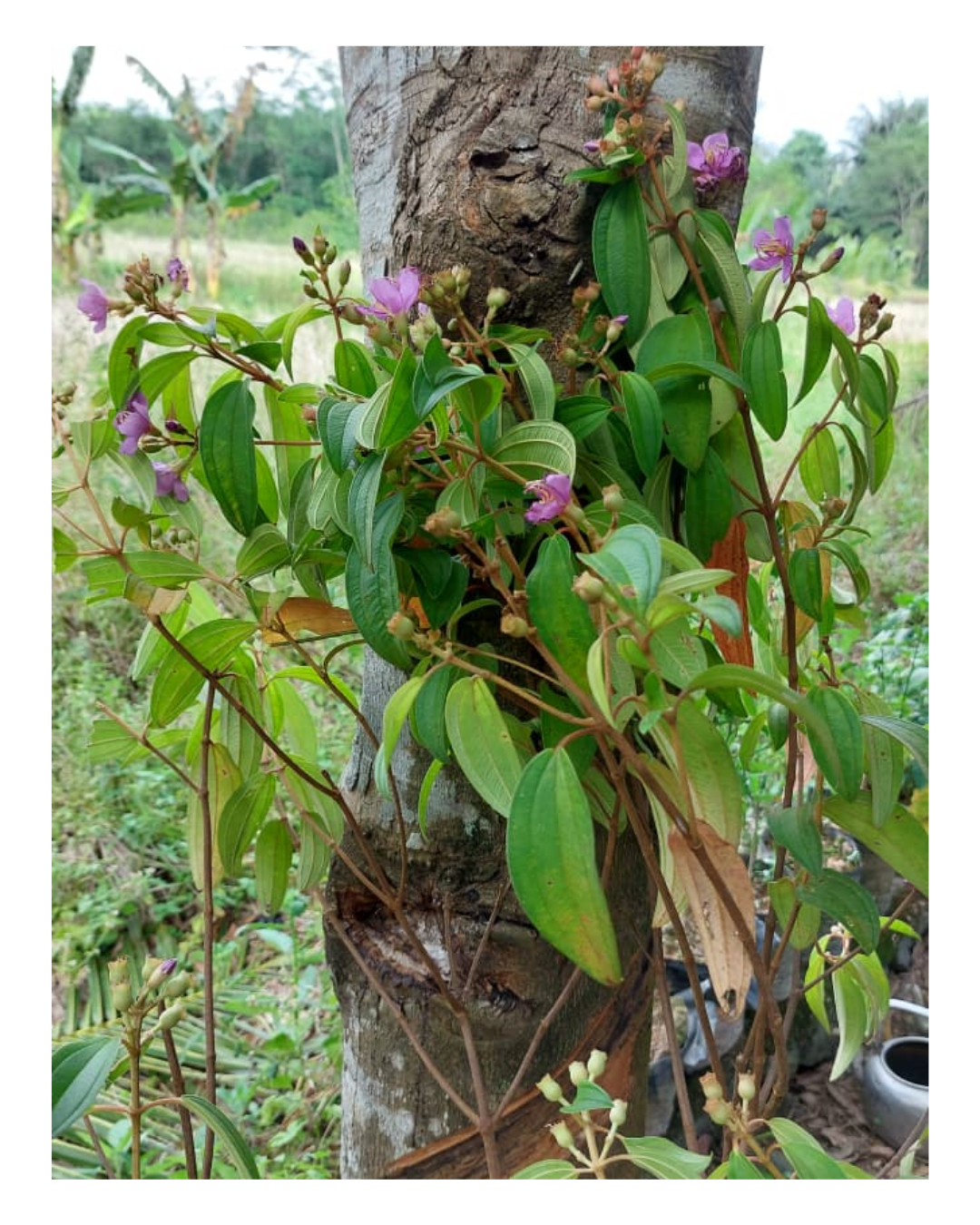
Rhodomyrtus tomentosa(Aiton) Hassk. (Karamunting) is an evergreen shrub of the Myrtaceae family traditionally used in South and Southeast Asia to treat diarrhea, dysentery, gynecological disorders, and wounds. A comprehensive review of 128 publications (2014–2024) demonstrates that its extracts and isolated metabolites exhibit diverse pharmacological properties, including antioxidant, antimicrobial, anti-inflammatory, and anticancer activities. Key bioactive compounds include rhodomyrtone, myricetin, gallic acid, ellagic acid,and piceatannol. Acute toxicity assays confirm safety up to 3000 mg/kg BW, though nanoformulations show heightened toxicity. Novel antibacterial mechanisms, such as membrane protein trapping and antibiofilm activity, highlight its prospective role againstmultidrug-resistant pathogens. Despite gaps in long-term toxicity and clinical data, R. tomentosarepresents a valuable source for new drug discovery.
Full text article
References
Abd Hamid, H., Sileshi Zeyohannes Roziasyahira M, S., & Yusoff, M. M. (2016). Rhodomyrtus tomentosa: A phytochemical and pharmacological review. Asian Journal of Pharmaceutical and Clinical Research, 10(1), 10–16. https://doi.org/10.22159/ajpcr.2017.v10i1.12773 DOI: https://doi.org/10.22159/ajpcr.2017.v10i1.12773
Chai, H., Liu, B., Zhan, H., Li, X., He, Z., Ye, J., Guo, Q., Chen, J., Zhang, J., & Li, S. (2019). Antidepressant effects of rhodomyrtone in mice with chronic unpredictable mild stress-induced depression. International Journal of Neuropsychopharmacology, 22(2), 157–164. https://doi.org/10.1093/ijnp/pyy091 DOI: https://doi.org/10.1093/ijnp/pyy091
Chang, J., & Kwon, H. J. (2016). Discovery of novel drug targets and their functions using phenotypic screening of natural products. Journal of Industrial Microbiology and Biotechnology, 43(2–3), 221–231. https://doi.org/10.1007/s10295-015-1681-y DOI: https://doi.org/10.1007/s10295-015-1681-y
Chorachoo, J., Saeloh, D., Saising, J., & Voravuthikunchai, S. P. (2016). Rhodomyrtone as a natural antibiotic for staphylococcal infections: In vitro and in vivo studies. Journal of Applied Microbiology, 120(4), 1235–1244. https://doi.org/10.1111/jam.13083 DOI: https://doi.org/10.1111/jam.13083
Cui, C., Zhang, S., You, L., Ren, J., Luo, W., Chen, W., & Zhao, M. (2013). Antioxidant capacity of anthocyanins from Rhodomyrtus tomentosa (Ait.) and identification of the major anthocyanins. Food Chemistry, 139(1–4), 1–8. https://doi.org/10.1016/j.foodchem.2013.01.107 DOI: https://doi.org/10.1016/j.foodchem.2013.01.107
Divya Priya, A., & Martin, A. (2025). UHPLC-MS/MS based comprehensive phenolic profiling, antimicrobial and antioxidant activities of Indian Rhodomyrtus tomentosa fruits. Scientific Reports, 15(1), Article 945. https://doi.org/10.1038/s41598-024-84800-7 DOI: https://doi.org/10.1038/s41598-024-84800-7
Elgoud Said, A. A., Mahmoud, B. K., Attia, E. Z., Abdelmohsen, U. R., & Fouad, M. A. (2021). Bioactive natural products from marine sponges belonging to family Hymedesmiidae. RSC Advances, 11(27), 16179–16191. https://doi.org/10.1039/D1RA00228G DOI: https://doi.org/10.1039/D1RA00228G
Flora of China Editorial Committee. (2001). Flora of China (Vol. 13). Science Press.
Geetha, K. M., Sridhar, C., & Murugan, V. (2010). Antioxidant and healing effect of aqueous alcoholic extract of Rhodomyrtus tomentosa (Ait.) Hassk on chronic gastric ulcers in rats. Journal of Pharmacy Research, 3(12), 2860–2862.
Hamed, A. A., Ghareeb, M. A., Soliman, N. R., Bakchiche, B., & Bardaweel, S. K. (2024). Insights into bioactive microbial natural products and drug discovery. Egyptian Pharmaceutical Journal, 23(1), 1–15. https://doi.org/10.4103/epj.epj_129_23 DOI: https://doi.org/10.4103/epj.epj_129_23
Hiranrat, A., & Mahabusarakam, W. (2008). Triterpenoids and acylphloroglucinols from Rhodomyrtus tomentosa. Phytochemistry, 69(12), 2621–2626. https://doi.org/10.1016/j.phytochem.2008.08.003 DOI: https://doi.org/10.1016/j.phytochem.2008.08.003
Kinghorn, A. D., & Balandrin, M. F. (Eds.). (1993). Human medicinal agents from plants (Vol. 534). American Chemical Society. https://doi.org/10.1021/bk-1993-0534 DOI: https://doi.org/10.1021/bk-1993-0534
Lai, T. N. H. (2013). Polyphenol composition and bioactivities of Rhodomyrtus tomentosa. Journal of Functional Foods, 5(1), 319–330. https://doi.org/10.1016/j.jff.2012.11.001 DOI: https://doi.org/10.1016/j.jff.2012.11.001
Lai, T. N. H., André, C., Rogez, H., Mignolet, E., Nguyen, T. B. T., & Larondelle, Y. (2015). Nutritional composition and antioxidant properties of the sim fruit (Rhodomyrtus tomentosa). Food Chemistry, 168, 410–416. https://doi.org/10.1016/j.foodchem.2014.07.081 DOI: https://doi.org/10.1016/j.foodchem.2014.07.081
Lavanya, G., Voravuthikunchai, S. P., & Towatana, N. H. (2012). Acetone extract from Rhodomyrtus tomentosa: A potent natural antioxidant. Evidence-Based Complementary and Alternative Medicine, 2012, Article 535479. https://doi.org/10.1155/2012/535479 DOI: https://doi.org/10.1155/2012/535479
Liu, H.-X., Tan, H.-B., & Qiu, S.-X. (2016). Antimicrobial acylphloroglucinols from the leaves of Rhodomyrtus tomentosa. Journal of Asian Natural Products Research, 18(6), 535–541. https://doi.org/10.1080/10286020.2015.1121997 DOI: https://doi.org/10.1080/10286020.2015.1121997
Liu, J., Song, J.-G., Su, J.-C., Huang, X.-J., Ye, W.-C., & Wang, Y. (2018). Tomentodione E, a new sec-pentyl syncarpic acid-based meroterpenoid from the leaves of Rhodomyrtus tomentosa. Journal of Asian Natural Products Research, 20(1), 67–74. https://doi.org/10.1080/10286020.2017.1318852 DOI: https://doi.org/10.1080/10286020.2017.1318852
Mitsuwan, W., Wintachai, P., & Voravuthikunchai, S. P. (2020). Rhodomyrtus tomentosa leaf extract and rhodomyrtone combat Streptococcus pneumoniae biofilm and inhibit invasiveness to human lung epithelial and enhance pneumococcal phagocytosis by macrophage. Current Microbiology, 77(11), 3546–3554. https://doi.org/10.1007/s00284-020-02164-3 DOI: https://doi.org/10.1007/s00284-020-02164-3
Mordmuang, A., Goodla, L., & Voravuthikunchai, S. P. (2021). Safety evaluation of Rhodomyrtus tomentosa leaf extract: Sub-acute toxicity in mice. Journal of Complementary Medicine Research, 12(2), 66–75. https://doi.org/10.5455/jcmr.2021.12.02.10 DOI: https://doi.org/10.5455/jcmr.2021.12.02.10
Na-Phatthalung, P., Teles, M., Voravuthikunchai, S. P., Tort, L., & Fierro-Castro, C. (2018). Immunomodulatory effects of Rhodomyrtus tomentosa leaf extract and its derivative compound, rhodomyrtone, on head kidney macrophages of rainbow trout (Oncorhynchus mykiss). Fish Physiology and Biochemistry, 44(2), 543–555. https://doi.org/10.1007/s10695-017-0452-2 DOI: https://doi.org/10.1007/s10695-017-0452-2
Nguyen, H., Tran, T., & Phan, T. (2009). Isolation of flavonoids from Rhodomyrtus tomentosa with osteogenic activity. Natural Product Research, 23(9), 901–909. https://doi.org/10.1080/14786410802576648
Nwabor, O. F., Leejae, S., & Voravuthikunchai, S. P. (2021). Rhodomyrtone accumulates in bacterial cell wall and cell membrane and inhibits the synthesis of multiple cellular macromolecules in epidemic methicillin-resistant Staphylococcus aureus. Antibiotics, 10(5), Article 543. https://doi.org/10.3390/antibiotics10050543 DOI: https://doi.org/10.3390/antibiotics10050543
Qin, X., Rauwolf, T. J., Li, P., Liu, H., McNeely, J., Hua, Y., Liu, H., & Porco, J. A. (2019). Isolation and synthesis of novel meroterpenoids from Rhodomyrtus tomentosa: Investigation of a reactive enetrione intermediate. Angewandte Chemie International Edition, 58(13), 4291–4296. https://doi.org/10.1002/anie.201814421 DOI: https://doi.org/10.1002/anie.201814421
Rani, R., Marinho Righetto, G., Schäfer, A.-B., & Wenzel, M. (2024). The diverse activities and mechanisms of the acylphloroglucinol antibiotic rhodomyrtone: Antibacterial activity and beyond. Antibiotics, 13(10), Article 936. https://doi.org/10.3390/antibiotics13100936 DOI: https://doi.org/10.3390/antibiotics13100936
Saeloh, D., Tipmanee, V., Jim, K. K., Dekker, M. P., Bitter, W., Voravuthikunchai, S. P., Wenzel, M., & Hamoen, L. W. (2018). The novel antibiotic rhodomyrtone traps membrane proteins in vesicles with increased fluidity. PLOS Pathogens, 14(2), Article e1006876. https://doi.org/10.1371/journal.ppat.1006876 DOI: https://doi.org/10.1371/journal.ppat.1006876
Saising, J., Hiranrat, A., Mahabusarakam, W., Ongsakul, M., & Voravuthikunchai, S. P. (2008). Rhodomyrtone from Rhodomyrtus tomentosa (Aiton) Hassk. as a natural antibiotic for staphylococcal cutaneous infections. Journal of Health Science, 54(5), 589–595. https://doi.org/10.1248/jhs.54.589 DOI: https://doi.org/10.1248/jhs.54.589
Shiratake, S., Nakahara, T., Iwahasi, H., Onodera, T., & Mizushina, Y. (2015). Rose myrtle (Rhodomyrtus tomentosa) extract and its component, piceatannol, enhance the activity of DNA polymerase and suppress the inflammatory response elicited by UVB-induced DNA damage in skin cells. Molecular Medicine Reports, 12(4), 5857–5864. https://doi.org/10.3892/mmr.2015.4156 DOI: https://doi.org/10.3892/mmr.2015.4156
Siriyong, T., Saising, J., & Voravuthikunchai, S. P. (2020). Acute and sub-chronic oral toxicity evaluations of rhodomyrtone in rodent models. Biomedicine & Pharmacotherapy, 129, Article 110410. https://doi.org/10.1016/j.biopha.2020.110410 DOI: https://doi.org/10.1016/j.biopha.2020.110410
Situmorang, P. C., Ilyas, S., Hutahaean, S., & Rosidah, R. (2020). Components and acute toxicity of nanoherbal haramonting (Rhodomyrtus tomentosa). Journal of Herbmed Pharmacology, 10(1), 139–148. https://doi.org/10.34172/jhp.2021.15 DOI: https://doi.org/10.34172/jhp.2021.15
Situmorang, P. C., Ilyas, S., Syahputra, R. A., Sari, R. M., Nugraha, A. P., & Ibrahim, A. (2024). Rhodomyrtus tomentosa as a new anticancer molecular strategy in breast histology via Her2, IL33, EGFR, and MUC1. Frontiers in Pharmacology, 15, Article 1345645. https://doi.org/10.3389/fphar.2024.1345645 DOI: https://doi.org/10.3389/fphar.2024.1345645
Suwandecha, T., Yingyongnarongkul, B.-E., Towtawin, K., Voravuthikunchai, S. P., & Sriwiriyajan, S. (2024). A novel antibiotic, rhodomyrtone: Pharmacokinetic studies in a murine model and optimization and validation of high-performance liquid chromatographic method for plasma analysis. Antibiotics, 13(2), Article 156. https://doi.org/10.3390/antibiotics13020156 DOI: https://doi.org/10.3390/antibiotics13020156
Tan, H. T. (2017). Synthetic approaches toward rhodomyrtone and analogues. Organic & Biomolecular Chemistry, 15(25), 5369–5379. https://doi.org/10.1039/C7OB01053D
Vo, T. S., & Ngo, D. H. (2019). The health beneficial properties of Rhodomyrtus tomentosa as potential functional food. Biomolecules, 9(2), Article 76. https://doi.org/10.3390/biom9020076 DOI: https://doi.org/10.3390/biom9020076
Vo, T. S., Le, T. T., Kim, S., & Ngo, D. (2020). The role of myricetin from Rhodomyrtus tomentosa (Aiton) Hassk fruits on downregulation of FcεRI-mediated mast cell activation. Journal of Food Biochemistry, 44(3), Article e13143. https://doi.org/10.1111/jfbc.13143 DOI: https://doi.org/10.1111/jfbc.13143
Wu, P., Ma, G., Li, N., Deng, Q., Yin, Y., & Huang, R. (2015). Investigation of in vitro and in vivo antioxidant activities of flavonoids rich extract from the berries of Rhodomyrtus tomentosa (Ait.) Hassk. Food Chemistry, 173, 194–202. https://doi.org/10.1016/j.foodchem.2014.10.023 DOI: https://doi.org/10.1016/j.foodchem.2014.10.023
Xiong, J., Huang, Y., Tang, Y., You, M., & Hu, J. (2013). Pentacyclic triterpenoids from the roots of Rhodomyrtus tomentosa. Chinese Journal of Organic Chemistry, 33(6), 1304–1308. https://doi.org/10.6023/cjoc201303029 DOI: https://doi.org/10.6023/cjoc201303029
Zhang, L., Chen, R., & Liu, X. (2017). Meroterpenoids from Rhodomyrtus tomentosa: Structures and bioactivities. Phytochemistry Letters, 20, 142–147. https://doi.org/10.1016/j.phytol.2017.04.020 DOI: https://doi.org/10.1016/j.phytol.2017.04.020
Zhang, Y.-B., Li, W., Zhang, Z.-M., Chen, N.-H., Zhang, X.-Q., Jiang, J.-W., Wang, G.-C., & Li, Y.-L. (2016a). Two new triterpenoids from the roots of Rhodomyrtus tomentosa. Chemistry Letters, 45(3), 368–370. https://doi.org/10.1246/cl.151188 DOI: https://doi.org/10.1246/cl.151188
Zhang, Y.-L., Chen, C., Wang, X.-B., Wu, L., Yang, M.-H., Luo, J., Zhang, C., Sun, H.-B., Luo, J.-G., & Kong, L.-Y. (2016b). Rhodomyrtials A and B, two meroterpenoids with a triketone-sesquiterpene-triketone skeleton from Rhodomyrtus tomentosa: Structural elucidation and biomimetic synthesis. Organic Letters, 18(16), 4068–4071. https://doi.org/10.1021/acs.orglett.6b01944 DOI: https://doi.org/10.1021/acs.orglett.6b01944
Zhang, Z., Ye, Y., & Wang, Y. (2018). Phloroglucinol derivatives and phenolic constituents from Rhodomyrtus tomentosa. Fitoterapia, 127, 220–226. https://doi.org/10.1016/j.fitote.2018.02.025 DOI: https://doi.org/10.1016/j.fitote.2018.02.025
Zhao, Z., Wu, L., Xie, J., Feng, Y., Tian, J., He, X., Li, B., Wang, L., Wang, X., Zhang, Y., Wu, S., & Zheng, X. (2020). Rhodomyrtus tomentosa (Aiton.): A review of phytochemistry, pharmacology and industrial applications research progress. Food Chemistry, 309, Article 125715. https://doi.org/10.1016/j.foodchem.2019.125715 DOI: https://doi.org/10.1016/j.foodchem.2019.125715
Zhu, C. F., Liu, H. X., He, L., Wang, J. G., & Qiu, S. X. (2015). Chemical constituents from leaves of Rhodomyrtus tomentosa. Redai Yaredai Zhiwu Xuebao, 23(1), 103–108.
Authors
Copyright (c) 2026 Jurnal Jamu Indonesia

This work is licensed under a Creative Commons Attribution-NonCommercial-ShareAlike 4.0 International License.
This work is licensed under a Creative Commons Attribution-NonCommercial-ShareAlike 4.0 International License. Copyright is retained by the authors.