
Bioassay-Guided and In Silico Identification of α-Amylase Inhibitors from Abelmoschus esculentus Fruit

Article Sidebar
-
Abelmoschus esculentus, Antidiabetes, Bioassay-guided, In silico, Inhibitor α-amilase
Abstract
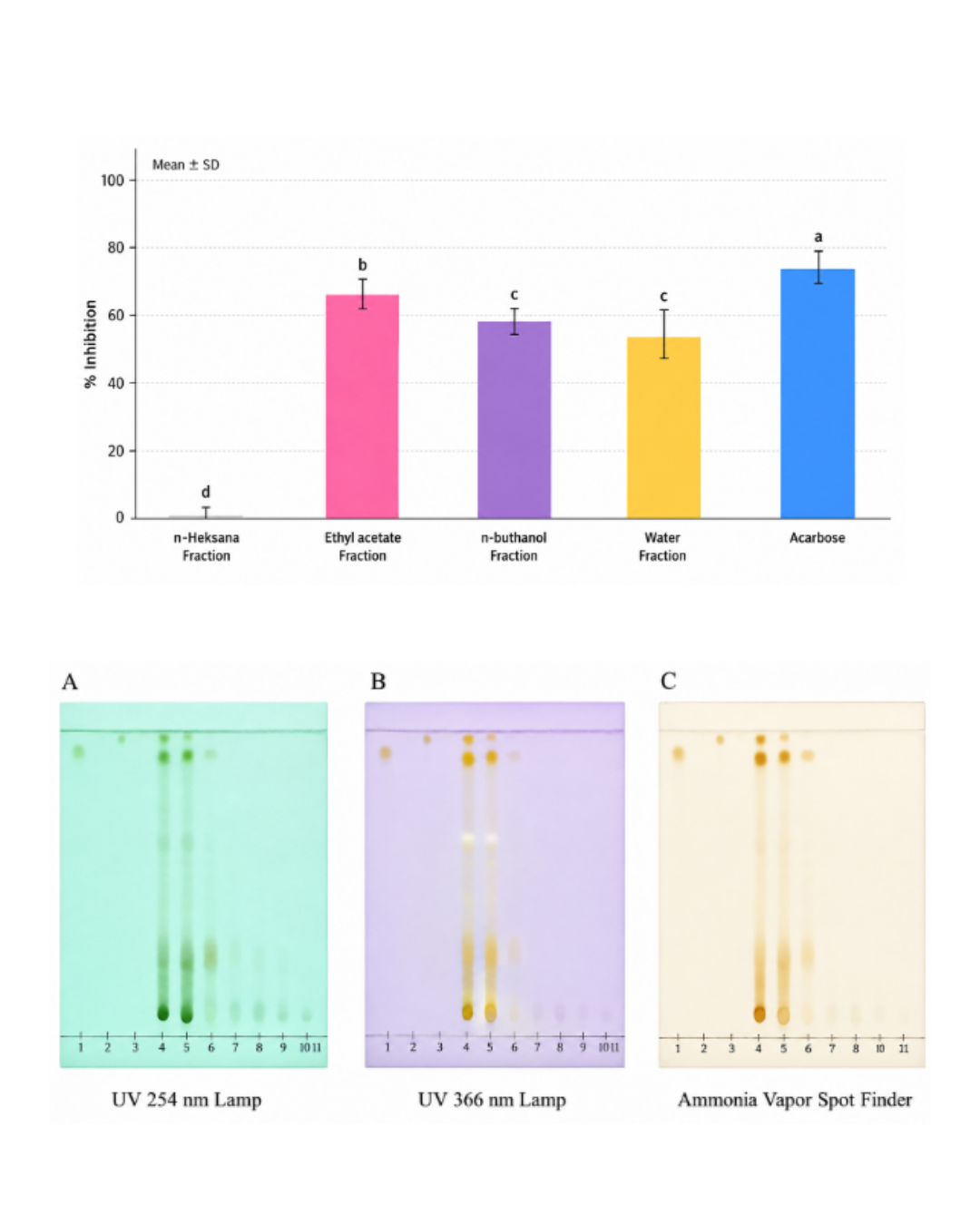
Diabetes mellitus is a metabolic disorder characterized by persistent hyperglycemia. Inhibition of α-amylase is one therapeutic strategy for controlling postprandial blood glucose levels. This study aimed to identify active compounds responsible for α-amylase inhibitory activity in Abelmoschus esculentus fruit using a bioassay-guided and in silico approach. Methanol extract, fractions, and subfractions were evaluated in vitro for α-amylase inhibition. The most active subfraction was characterized by LC–MS and further analyzed by molecular docking and ADMET prediction. Subfraction 2 showed the strongest inhibitory activity, with 74.2634 ± 4.7091% inhibition. LC–MS identified nine compounds, four of which showed favorable binding affinity and interaction patterns with α-amylase: 2-hydroxy-7-methoxycadalene, N-E-coumaroyl tyramine, homovanillic acid, and quercetin. These findings suggest that A. esculentus fruit contains bioactive compounds with potential α-amylase inhibitory activity.
Full text article
References
Agregán, R., Pateiro, M., Bohrer, B. M., Shariati, M. A., Nawaz, A., Gohari, G., & Lorenzo, J. M. (2023). Biological activity and development of functional foods fortified with okra (Abelmoschus esculentus). Critical Reviews in Food Science and Nutrition, 63(23), 6018–6033. https://doi.org/10.1080/10408398.2022.2026874
Aguilar-Camacho, M., Gómez-Sánchez, C. E., Cruz-Mendívil, A., Luna-Vital, D. A., Guerrero-Analco, J. A., Monribot-Villanueva, J. L., & Gutiérrez-Uribe, J. A. (2024). Untargeted metabolomic analysis of Randia echinocarpa cell cultures treated with L-tyrosine. Plant Cell, Tissue and Organ Culture, 158(1), Article 14. https://doi.org/10.1007/s11240-024-02808-3
Ahmad, S., Ali, M., Ali, J., Khan, A., Khan, S., Ullah, Z., Rafiullah, & Hussain, S. (2025). Factors influencing adherence to recommended treatment among individuals with type 2 diabetes: A cross-sectional study from tertiary hospital Swat, Pakistan. Frontier in Medical and Health Research, 3(5), 507–519. https://doi.org/10.5281/zenodo.15854344
Ahmed, O. H., Hamad, M. N., & Jaafar, N. S. (2017). Phytochemical investigation of Chenopodium murale (family: Chenopodiaceae) cultivated in Iraq, isolation and identification of scopoletin and gallic acid. Asian Journal of Pharmaceutical and Clinical Research, 10(11), 70–77. https://doi.org/10.22159/ajpcr.2017.v10i11.20504
Astutiningsih, C. (2021). Isolation and inhibition test of quercetin compound from okra fruit (Abelmoschus esculentus L.). Jurnal Farmasi Sains dan Praktis, 7(3), 356–364. https://doi.org/10.31603/pharmacy.v7i3.6203
Astutiningsih, C., & Anggraeny, E. N. (2023). Penentuan fenolik total, flavonoid total, aktivitas antioksidan dan nilai SPF fraksi buah okra (Abelmoschus esculentus L.). Cendekia Eksakta, 8(1). https://doi.org/10.31942/ce.v8i1.8260
Astutiningsih, C., & Meri, M. (2025). Potential of flavonoid isolate from okra fruit (Abelmoschus esculentus L.) as antidiabetic and antilipase agent in vitro and in silico. Jurnal Farmasi Sains dan Terapan (Journal of Pharmacy Science and Practice), 12(1), 34–46. https://doi.org/10.33508/jfst.v12i1.6053
Bouslamti, M., Loukili, E. H., Elrherabi, A., El Moussaoui, A., Chebaibi, M., Bencheikh, N., Nafidi, H.-A., Bin Jardan, Y. A., Bourhia, M., Bnouham, M., Lyoussi, B., & Benjelloun, A. S. (2023). Phenolic profile, inhibition of α-amylase and α-glucosidase enzymes, and antioxidant properties of Solanum elaeagnifolium Cav. (Solanaceae): In vitro and in silico investigations. Processes, 11(5), Article 1384. https://doi.org/10.3390/pr11051384
Dong, Y., Sui, L., Yang, F., Ren, X., Xing, Y., & Xiu, Z. (2022). Reducing the intestinal side effects of acarbose by baicalein through the regulation of gut microbiota: An in vitro study. Food Chemistry, 394, Article 133561. https://doi.org/10.1016/j.foodchem.2022.133561
Durazzo, A., Lucarini, M., Novellino, E., Souto, E. B., Daliu, P., & Santini, A. (2018). Abelmoschus esculentus (L.): Bioactive components’ beneficial properties—Focused on antidiabetic role—for sustainable health applications. Molecules, 24(1), Article 38. https://doi.org/10.3390/molecules24010038
Etsassala, N. G. E. R., Badmus, J. A., Marnewick, J. L., Iwuoha, E. I., Nchu, F., & Hussein, A. A. (2020). Alpha-glucosidase and alpha-amylase inhibitory activities, molecular docking, and antioxidant capacities of Salvia aurita constituents. Antioxidants, 9(11), Article 1149. https://doi.org/10.3390/antiox9111149
Ghosh, A., Maheshwari, V., & Basu, S. (2025). Self-care practices and their determinants among older adults with diabetes and hypertension in India: Evidence from a national survey. International Journal of Diabetes in Developing Countries. https://doi.org/10.1007/s13410-025-01541-7
Hafeez, M., Hassan, S. M., Mughal, S. S., Munir, M., & Khan, M. K. (2020). Antioxidant, antimicrobial and cytotoxic potential of Abelmoschus esculentus. Chemical and Biomolecular Engineering, 5(4), 69–79. https://doi.org/10.11648/j.cbe.20200504.11
Hanani, E. 2015. Analisis Fitokimia. Buku Kedokteran EGC, Jakarta.
Herowati, R., Puradewa, L., Herdianty, J., & Widodo, G. P. (2020). Antidiabetic activity of okra fruit (Abelmoschus esculentus (L.) Moench) extract and fractions in two conditions of diabetic rats. Indonesian Journal of Pharmacy, 31(1), 27–34. https://doi.org/10.14499/indonesianjpharm31iss1pp27
Højmark, L. A. B. (2020). Analysis of the marine sponge Pachymatisma normani [Master’s thesis, University of Bergen].
Hu, W., Nie, Y., Huang, L., & Qian, D. (2024). Contribution of phenolamides to the quality evaluation in Lycium spp. Journal of Ethnopharmacology, 331, Article 118220. https://doi.org/10.1016/j.jep.2024.118220
Kasmi, S., Hamdi, A., Atmani-Kilani, D., Debbache-Benaida, N., Jaramillo-Carmona, S., Rodríguez-Arcos, R., Jiménez-Araujo, A., Ayouni, K., Atmani, D., & Guillén-Bejarano, R. (2021). Characterization of phenolic compounds isolated from the Fraxinus angustifolia plant and several associated bioactivities. Journal of Herbal Medicine, 29, Article 100485. https://doi.org/10.1016/j.hermed.2021.100485
Kehinde, I. O., Olatunji, O. E., & Adegoke, A. (2022). Electrocardiography effects of Abelmoschus esculentus fruit extract and its isolated compounds using isolated frog heart perfusion. World Journal of Advanced Research and Reviews, 14(2), 104–111. https://doi.org/10.30574/wjarr.2022.14.2.0368
Li, X., Bai, Y., Jin, Z., & Svensson, B. (2022). Food-derived non-phenolic α-amylase and α-glucosidase inhibitors for controlling starch digestion rate and guiding diabetes-friendly recipes. LWT, 153, Article 112455. https://doi.org/10.1016/j.lwt.2021.112455
Magaji, U. F., Sacan, O., & Yanardag, R. (2020). Alpha amylase, alpha glucosidase and glycation inhibitory activity of Moringa oleifera extracts. South African Journal of Botany, 128, 225–230. https://doi.org/10.1016/j.sajb.2019.11.024
Młynarska, E., Czarnik, W., Dzieża, N., Jędraszak, W., Majchrowicz, G., Prusinowski, F., Stabrawa, M., Rysz, J., & Franczyk, B. (2025). Type 2 diabetes mellitus: New pathogenetic mechanisms, treatment and the most important complications. International Journal of Molecular Sciences, 26(3), Article 1094. https://doi.org/10.3390/ijms26031094
Oguntibeju, O. O. (2019). Type 2 diabetes mellitus, oxidative stress and inflammation: Examining the links. International Journal of Physiology, Pathophysiology and Pharmacology, 11(3), 45–63.
Panighel, G., Ferrarese, I., Lupo, M. G., Sut, S., Dall’Acqua, S., & Ferri, N. (2022). Investigating the in vitro mode of action of okra (Abelmoschus esculentus) as hypocholesterolemic, anti-inflammatory, and antioxidant food. Food Chemistry: Molecular Sciences, 5, Article 100126. https://doi.org/10.1016/j.fochms.2022.100126
Peter, E. L., Nagendrappa, P. B., Ajayi, C. O., & Sesaazi, C. D. (2021). Total polyphenols and antihyperglycemic activity of aqueous fruits extract of Abelmoschus esculentus: Modeling and optimization of extraction conditions. PLOS ONE, 16(4), Article e0250405. https://doi.org/10.1371/journal.pone.0250405
Radan, M., Ćujić Nikolić, N., Kuzmanović Nedeljković, S., Mutavski, Z., Krgović, N., Stević, T., Marković, S., Jovanović, A., Živković, J., & Šavikin, K. (2024). Multifunctional pomegranate peel microparticles with health-promoting effects for the sustainable development of novel nutraceuticals and pharmaceuticals. Plants, 13(2), Article 281. https://doi.org/10.3390/plants13020281
Rivas, A. M., & Nugent, K. (2021). Hyperglycemia, insulin, and insulin resistance in sepsis. The American Journal of the Medical Sciences, 361(3), 297–302. https://doi.org/10.1016/j.amjms.2020.11.007
Riyaphan, J., Pham, D.-C., Leong, M. K., & Weng, C.-F. (2021). In silico approaches to identify polyphenol compounds as α-glucosidase and α-amylase inhibitors against type-II diabetes. Biomolecules, 11(12), Article 1877. https://doi.org/10.3390/biom11121877
Schwab, W., Scheller, G., & Schreier, P. (1990). Glycosidically bound aroma components from sour cherry. Phytochemistry, 29(2), 607–612. https://doi.org/10.1016/0031-9422(90)85126-Z
Shareef, A. A., Farhan, F. J., & Alriyahee, F. A. A. (2023). Antibacterial activity of silver nanoparticles composed by fruit aqueous extract of Abelmoschus esculentus (L.) Moench alone or in combination with antibiotics. Basrah Journal of Agricultural Sciences, 36(2), 144–174. https://doi.org/10.37077/25200860.2023.36.2.12
Stipanovic, R. D., Greenblatt, G. A., Beier, R. C., & Bell, A. A. (1981). 2-Hydroxy-7-methoxycadalene: The precursor of lacinilene C 7-methyl ether in Gossypium. Phytochemistry, 20(4), 729–730. https://doi.org/10.1016/0031-9422(81)85162-X
Sun, W., & Shahrajabian, M. H. (2023). Therapeutic potential of phenolic compounds in medicinal plants—Natural health products for human health. Molecules, 28(4), Article 1845. https://doi.org/10.3390/molecules28041845
Ullah, H., Jan, T., Ahmad, B., Nawaz, T., Khan, I., Ahmad, K., Rehman, A. U., Murshed, A., Lu, J., & Ali, A. (2024). Phytochemical profiling and therapeutic potential of Abelmoschus esculentus fruit extracts: Insights into antidiabetic potential in in vitro and in vivo experiments. Journal of Food Quality, 2024, Article 7096736. https://doi.org/10.1155/2024/7096736
Xiong, B., Zhang, W., Wu, Z., Liu, R., Yang, C.-Y., Hui, A., Huang, X., & Xian, Z. (2021). Preparation, characterization, antioxidant and anti-inflammatory activities of acid-soluble pectin from okra (Abelmoschus esculentus L.). International Journal of Biological Macromolecules, 181, 824–834. https://doi.org/10.1016/j.ijbiomac.2021.03.202
Authors

This work is licensed under a Creative Commons Attribution-NonCommercial-ShareAlike 4.0 International License. Copyright @2017. This is an open-access article distributed under the terms of the Creative Commons Attribution-NonCommercial-ShareAlike 4.0 International License (http://creativecommons.org/licenses/by-nc-sa/4.0/) which permits unrestricted non-commercial used, distribution and reproduction in any medium