
Antihypertensive Jamu Supplementation Improves Blood Pressure and Renal Oxidative Stress Markers in Fructose-Fed Rats

Article Sidebar
-
Antioxidant, fructose, hypertension, jamu, renal damage
Abstract
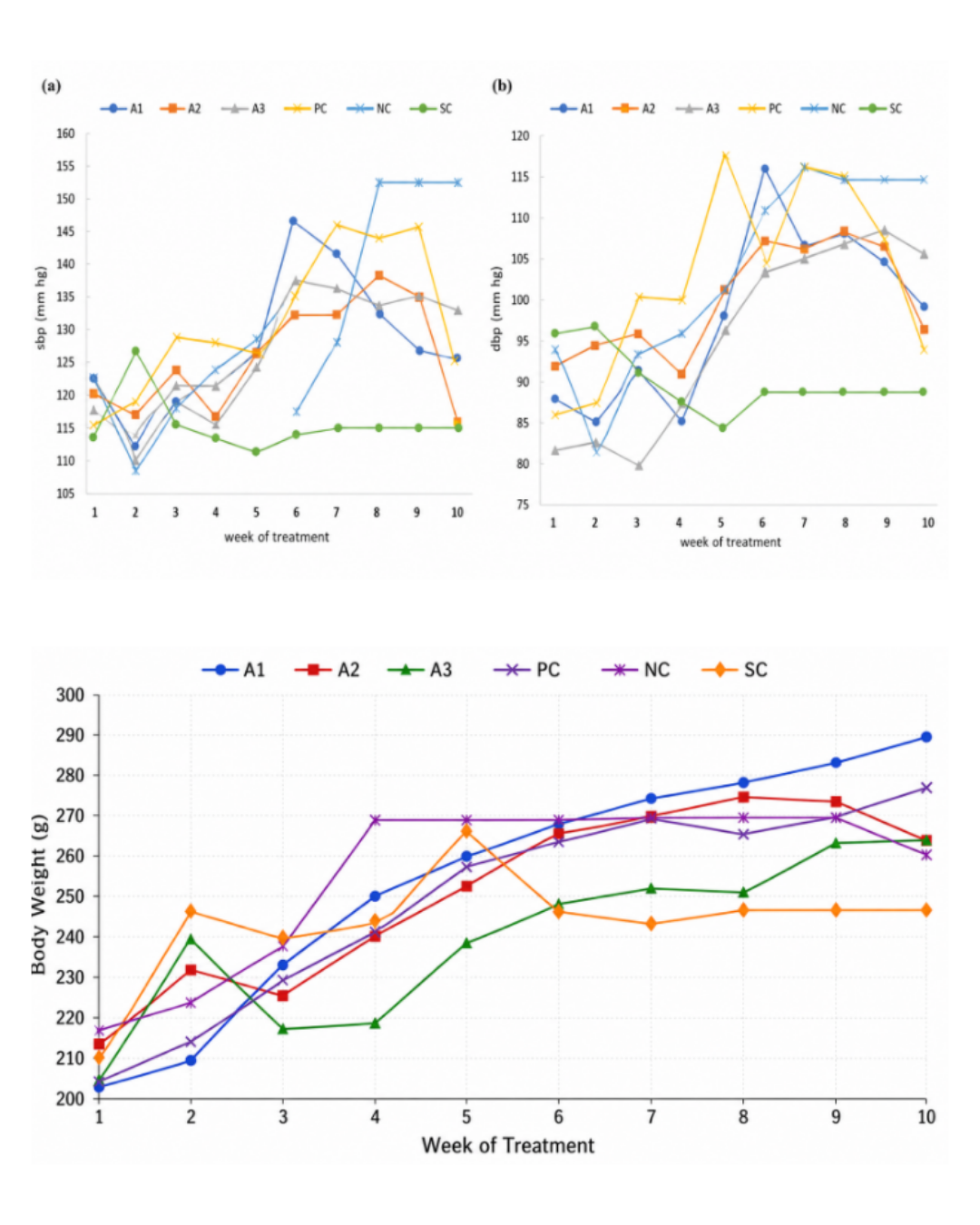
High fructose consumption induces hypertension and renal oxidative stress, and herbal supplements (jamu) are potential agents for reversing this damage. This study examined the antihypertensive and antioxidant activity of a jamu formulation by measuring blood pressure and renal superoxide dismutase (SOD), glutathione (GSH), and malondialdehyde (MDA) levels in fructose-induced rats. Thirty Sprague-Dawley rats were divided into six groups: jamu at 0.01 (A1), 0.02 (A2), and 0.03 g/kg body weight (BW) (A3); captopril as the positive control (PC); negative control (NC); and normal control (SC). Rats received 10% fructose for 8 weeks to induce hypertension, continuing concurrently during the 2-week treatment period (weeks 9–10). Jamu supplementation significantly reduced blood pressure and MDA levels and increased SOD activity and GSH levels compared with the NC group (p < 0.05). Two weeks of jamu administration exerted antihypertensive and antioxidant effects, improving blood pressure control and renal oxidative stress markers in fructose-fed rats.
Full text article
References
Abarikwu, S. O., Njoku, R. C., Lawrence, C. J., Charles, I. A., & Ikewuchi, J. C. (2017). Rutin ameliorates oxidative stress and preserves hepatic and renal functions following exposure to cadmium and ethanol. Pharmaceutical Biology, 55(1), 2161–2169. https://doi.org/10.1080/13880209.2017.1387575 DOI: https://doi.org/10.1080/13880209.2017.1387575
Abrika, O. S. S., Yam, M. F., Asmawi, M. Z., Sadikun, A., Dieng, H., & Hussain, E. A. (2013). Effects of extracts and fractions of Gynura procumbens on rat atrial contraction. Journal of Acupuncture and Meridian Studies, 6(4), 199–207. https://doi.org/10.1016/j.jams.2013.01.020 DOI: https://doi.org/10.1016/j.jams.2013.01.020
Afroz, S., Hossain, I., Eusufzai, T. K., Islam, S., Jabin, D., Rahman, S., & Rahmatullah, M. (2014). Antinociceptive activity evaluation of an Indonesian herbal preparation Cleng Marem. Advances in Natural and Applied Sciences, 8(2), 75–81.
Afsar, T., Razak, S., Almajwal, A., & Al-disi, D. (2020). Doxorubicin-induced alterations in kidney functioning, oxidative stress, DNA damage, and renal tissue morphology; Improvement by Acacia hydaspica tannin-rich ethyl acetate fraction. Saudi Journal of Biological Sciences, 27(9), 2251–2260. https://doi.org/10.1016/j.sjbs.2020.07.011 DOI: https://doi.org/10.1016/j.sjbs.2020.07.011
Ai, G., Tan, W., Huang, Z., Xu, L., Yu, Q., Wu, X., Xie, J., Su, Z., Chen, J., Chen, X., & Dou, Y. (2025). Unveiling the sweet culprit: Excessive fructose intake leading to kidney injury through hypoxanthine accumulation. Journal of Functional Foods, 131(June), 106959. https://doi.org/10.1016/j.jff.2025.106959 DOI: https://doi.org/10.1016/j.jff.2025.106959
Alara, O. R., Alara, J., & Olalere, O. A. (2016). Review on Phaleria macrocarpa pharmacological and phytochemical properties. Drug Designing, 05(03), 1–5. https://doi.org/10.4172/2169-0138.1000134 DOI: https://doi.org/10.4172/2169-0138.1000134
Altaf, R., Asmawi, M. Z. Bin, Dewa, A., Sadikun, A., & Umar, M. I. (2013). Phytochemistry and medicinal properties of Phaleria macrocarpa (Scheff.) Boerl. extracts. Pharmacognosy Reviews, 7(13), 73–80. https://doi.org/10.4103/0973-7847.112853 DOI: https://doi.org/10.4103/0973-7847.112853
Andriati, A., & Wahjudi, R. M. T. (2016). Tingkat penerimaan penggunaan jamu sebagai alternatif penggunaan obat modern pada masyarakat ekonomi rendah-menengah dan atas. Masyarakat, Kebudayaan Dan Politik, 29(3), 133–145. https://doi.org/10.20473/mkp.V29I32016.133-145 DOI: https://doi.org/10.20473/mkp.V29I32016.133-145
Arya, V. S., Subramanian, A., Rajendran, K., Sekar, M., Subramaniyan, V., & Karnam, M. (2025). Fructose consumption and metabolic hypertension in rats: A systematic review and meta-analysis. PeerJ, 13(e20097), 1–23. https://doi.org/10.7717/peerj.20097 DOI: https://doi.org/10.7717/peerj.20097
Eff, A. R. Y., Rahayu, S. T., Mahayasih, P. G., & Januarko, M. U. (2020). Standardization of Indonesian traditional antihypertensive medicines (Jamu) through the ACE inhibitor mechanism. Pharmacognosy Journal, 12(3), 422–429. https://doi.org/10.5530/pj.2020.12.65 DOI: https://doi.org/10.5530/pj.2020.12.65
Elsisy, R. A., El-magd, M. A., & Abdelkarim, M. A. (2021). High-fructose diet induces earlier and more severe kidney damage than high-fat diet on rats. The Egyptian Journal of Histology, 44(2), 535–544. https://doi.org/10.21608/ejh.2020.31508.1304 DOI: https://doi.org/10.21608/ejh.2020.31508.1304
Giribabu, N., Rao, P. V., Kumar, K. P., Muniandy, S., Swapna Rekha, S., & Salleh, N. (2014). Aqueous extract of Phyllanthus niruri leaves displays in vitro antioxidant activity and prevents the elevation of oxidative stress in the kidney of streptozotocin-induced diabetic male rats. Evidence-Based Complementary and Alternative Medicine, 2014. https://doi.org/10.1155/2014/834815 DOI: https://doi.org/10.1155/2014/834815
Hamad, A., & Özkan, M. H. (2024). Time-dependent relationship between endothelial dysfunction and high blood pressure in fructose-drinking rats. Turkish Journal of Pharmaceutical Sciences, 21(5), 390–398. https://doi.org/10.4274/tjps.galenos2024.07944 DOI: https://doi.org/10.4274/tjps.galenos2024.07944
Hannou, S. A., Haslam, D. E., McKeown, N. M., & Herman, M. A. (2018). Fructose metabolism and metabolic disease. Journal of Clinical Investigation, 128(2), 545–555. https://doi.org/10.1172/JCI96702 DOI: https://doi.org/10.1172/JCI96702
Hidayati, L., Widodo, A. D. W., & Hidayat, B. (2020). Animal models with metabolic syndrome markers induced by high fat diet and fructose. Medical Laboratory Technology Journal, 6(1), 13–20. https://doi.org/10.31964/mltj.v1i1.266 DOI: https://doi.org/10.31964/mltj.v6i1.266
Hidayati, M. D., Ersam, T., Shimizu, K., & Fatmawati, S. (2017). Antioxidant activity of Syzygium polyanthum extracts. Indonesian Journal of Chemistry, 17(1), 49–53. https://doi.org/10.22146/ijc.23545 DOI: https://doi.org/10.22146/ijc.23545
Ighodaro, O. M., & Akinloye, O. A. (2018). First line defense antioxidants-superoxide dismutase (SOD), catalase (CAT), and glutathione peroxidase (GPX): Their fundamental role in the entire antioxidant defense grid. Alexandria Journal of Medicine, 54(4), 287–293. https://doi.org/10.1016/j.ajme.2017.09.001 DOI: https://doi.org/10.1016/j.ajme.2017.09.001
Ismail, A., Anuar, T., Suffian, I. F. M., Hamid, A. A. A., Omar, M. N., Mustafa, B. E., & Ahmad, W. A. N. W. (2022). Angiotensin converting enzyme (ACE) inhibition activity by Syzygium polyanthum Wight (Walp.) leaves: Mechanism and specificity. Pharmacognosy Journal, 14(1), 76–84. https://doi.org/10.5530/pj.2022.14.11 DOI: https://doi.org/10.5530/pj.2022.14.11
Ismail, A., Mohamed, M., Sulaiman, S. A., & Ahmad, W. A. N. W. (2013). Autonomic nervous system mediates the hypotensive effects of aqueous and residual methanolic extracts of Syzygium polyanthum (Wight) Walp. var. polyanthum leaves in anaesthetized rats. Evidence-Based Complementary and Alternative Medicine, 2013(716532), 1–16. https://doi.org/10.1155/2013/716532 DOI: https://doi.org/10.1155/2013/716532
Jomova, K., Alomar, S. Y., Alwasel, S. H., Nepovimova, E., Kuca, K., & Valko, M. (2024). Several lines of antioxidant defense against oxidative stress: Antioxidant enzymes, nanomaterials with multiple enzyme-mimicking activities, and low-molecular-weight antioxidants. Archives of Toxicology, 98(5), 1323–1367. https://doi.org/10.1007/s00204-024-03696-4 DOI: https://doi.org/10.1007/s00204-024-03696-4
Kim, M., Do, G. Y., & Kim, I. (2020). Activation of the renin-angiotensin system in high fructose-induced metabolic syndrome. Korean Journal of Physiology and Pharmacology, 24(4), 319–328. https://doi.org/10.4196/KJPP.2020.24.4.319 DOI: https://doi.org/10.4196/kjpp.2020.24.4.319
Kitada, M., Xu, J., Ogura, Y., Monno, I., & Koya, D. (2020). Manganese superoxide dismutase dysfunction and the pathogenesis of kidney disease. Frontiers in Physiology, 11(July), 1–16. https://doi.org/10.3389/fphys.2020.00755 DOI: https://doi.org/10.3389/fphys.2020.00755
Köseler, E., Kızıltan, G., Türker, P. F., Saka, M., Ok, M. A., Bacanlı, D., Aydos, T. R., Bayraktar, N., & Özdemir, H. (2018). The effects of glucose and fructose on body weight and some biochemical parameters in rats. Progress in Nutrition, 20(1), 46–51. https://doi.org/10.23751/pn.v20i1.5956
Kumari, S., Deori, M., Elancheran, R., Kotoky, J., & Devi, R. (2016). In-vitro and in-vivo antioxidant, anti-hyperlipidemic properties and chemical characterization of Centella asiatica (L.) extract. Frontiers in Pharmacology, 7(OCT), 1–12. https://doi.org/10.3389/fphar.2016.00400 DOI: https://doi.org/10.3389/fphar.2016.00400
Kusumastuty, I., Sembiring, F., Andarini, S., & Handayani, D. (2020). High-fat-high-fructose diet decreases hippocampal neuron number in male rats. The Indonesian Biomedical Journal, 12(1), 1–7. https://doi.org/10.18585/inabj.v12i1.865 DOI: https://doi.org/10.18585/inabj.v12i1.865
Lee, H., & Jose, P. A. (2021). Coordinated contribution of NADPH oxidase- and mitochondria-derived reactive oxygen species in metabolic syndrome and its implication in renal dysfunction. Frontiers in Pharmacology, 12(May), 1–18. https://doi.org/10.3389/fphar.2021.670076 DOI: https://doi.org/10.3389/fphar.2021.670076
Liu, R., Chen, S., Ren, G., Shao, F., & Huang, H. (2013). Phenolic compounds from roots of Imperata cylindrica var. major. Chinese Herbal Medicines, 5(3), 240–243. https://doi.org/10.3969/j.issn.1674-6348.2013.03.011
Maneesai, P., Bunbupha, S., Kukongviriyapan, U., Senggunprai, L., Kukongviriyapan, V., Prachaney, P., & Pakdeechotr, P. (2017). Effect of asiatic acid on the Ang II-AT1R-NADPH oxidase-NF-κB pathway in renovascular hypertensive rats. Naunyn-Schmiedebergs Archiv für Pharmakologie, 390(10), 1073–1083. https://doi.org/10.1007/s00210-017-1408-x DOI: https://doi.org/10.1007/s00210-017-1408-x
Nilsson, P. M., Tuomilehto, J., & Rydén, L. (2019). The metabolic syndrome – What is it and how should it be managed? European Journal of Preventive Cardiology, 26(2_suppl), 33–46. https://doi.org/10.1177/2047487319886404 DOI: https://doi.org/10.1177/2047487319886404
Novelli, A., & Bianchetti, A. (2022). Glutathione: Pharmacological aspects and implications for clinical use. Geriatric Care, 8(2), Art. 10390. https://doi.org/10.4081/gc.2022.10390 DOI: https://doi.org/10.4081/gc.2022.10390
Pereira, R. M., Botezelli, J. D., da Cruz Rodrigues, K. C., Mekary, R. A., Cintra, D. E., Pauli, J. R., da Silva, A. S. R., Ropelle, E. R., & de Moura, L. P. (2017). Fructose consumption in the development of obesity and the effects of different protocols of physical exercise on the hepatic metabolism. Nutrients, 9(4), Art. 405. https://doi.org/10.3390/nu9040405 DOI: https://doi.org/10.3390/nu9040405
Phaniendra, A., Jestadi, D. B., & Periyasamy, L. (2015). Free radicals: Properties, sources, targets, and their implication in various diseases. Indian Journal of Clinical Biochemistry, 30(1), 11–26. https://doi.org/10.1007/s12291-014-0446-0 DOI: https://doi.org/10.1007/s12291-014-0446-0
Prasad, G. V. R. (2014). Metabolic syndrome and chronic kidney disease: Current status and future directions. World Journal of Nephrology, 3(4), 210–219. https://doi.org/10.5527/wjn.v3.i4.210 DOI: https://doi.org/10.5527/wjn.v3.i4.210
Prijanti, A. R., & Hawali, A. A. (2018). Syzygium aromaticum (clove) effect on catalase activity due to carbon tetrachloride-induced oxidative stress in rat liver. Acta Biochimica Indonesiana, 1(1), 31–36. DOI: https://doi.org/10.32889/actabioina.v1i1.5
Rinayanti, A., Radji, M., Mun'im, A., & Suyatna, F. D. (2013). Screening angiotensin converting enzyme (ACE) inhibitor activity of antihypertensive medicinal plants from Indonesia. International Journal of Pharmacy Teaching & Practice, 4(1), 527–532.
Rojas-Rivera, J., Ortiz, A., & Egido, J. (2012). Antioxidants in kidney diseases: The impact of bardoxolone methyl. International Journal of Nephrology, 2012. https://doi.org/10.1155/2012/321714 DOI: https://doi.org/10.1155/2012/321714
Ruslin, Asmawi, M. Z., Rianse, U., Sahidin, I., Dhianawaty, D., Soemardji, A. A., & Amalia, L. (2013). Anti-hypertensive activity of alang-alang (Imperata cylindrica (L.) Beauv. root methanolic extract on male Wistar rats. International Journal of Research in Pharmaceutical Sciences, 4(4), 537–542.
Sigit, F. S., Tahapary, D. L., Trompet, S., Sartono, E., Willems Van Dijk, K., Rosendaal, F. R., & De Mutsert, R. (2020). The prevalence of metabolic syndrome and its association with body fat distribution in middle-aged individuals from Indonesia and the Netherlands: A cross-sectional analysis of two population-based studies. Diabetology and Metabolic Syndrome, 12(1), 1–11. https://doi.org/10.1186/s13098-019-0503-1 DOI: https://doi.org/10.1186/s13098-019-0503-1
Susilawati, E., Levita, J., Susilawati, Y., & Sumiwi, S. A. (2024). Pengaruh diet tinggi fruktosa terhadap resistensi insulin pada tikus jantan putih (Rattus norvegicus) Galur Wistar: Artikel Penelitian. Jurnal Farmasi Indonesia, 16(2), 150–156. DOI: https://doi.org/10.35617/jfionline.v16i2.274
Tan, B. L., Norhaizan, M. E., Liew, W. P. P., & Rahman, H. S. (2018). Antioxidant and oxidative stress: A mutual interplay in age-related diseases. Frontiers in Pharmacology, 9(OCT), 1–28. https://doi.org/10.3389/fphar.2018.01162 DOI: https://doi.org/10.3389/fphar.2018.01162
Tan, H. L., Chan, K. G., Pusparajah, P., Lee, L. H., & Goh, B. H. (2016). Gynura procumbens: An overview of the biological activities. Frontiers in Pharmacology, 7(MAR), 1–14. https://doi.org/10.3389/fphar.2016.00052 DOI: https://doi.org/10.3389/fphar.2016.00052
Verma, S., Singh, P., Khurana, S., Ganguly, N. K., Kukreti, R., Saso, L., Rana, D. S., Taneja, V., & Bhargava, V. (2021). Implications of oxidative stress in chronic kidney disease: A review on current concepts and therapies. Kidney Research and Clinical Practice, 40(2), 183–193. https://doi.org/10.23876/j.krcp.20.163 DOI: https://doi.org/10.23876/j.krcp.20.163
Xie, X. W. (2017). Liquiritigenin attenuates cardiac injury induced by high fructose-feeding through fibrosis and inflammation suppression. Biomedicine and Pharmacotherapy, 86, 694–704. https://doi.org/10.1016/j.biopha.2016.12.066 DOI: https://doi.org/10.1016/j.biopha.2016.12.066
Yanti, A. R., Radji, M., Mun, A., & Suyatna, F. D. (2014). Methanol extract of Phaleria macrocarpa (Scheff.) Boerl improved renal and liver histological changes in fructose 10% induced rats. Journal of Pharmaceutical and Biological Research, 2(1), 79–84.
Yüksel, D., Başeğmez, M., & Kan, F. (2025). The protective effect of boric acid against high fructose-induced liver and kidney damage in rats. Biological Trace Element Research, 203(10), 5209–5218. https://doi.org/10.1007/s12011-025-04542-z DOI: https://doi.org/10.1007/s12011-025-04542-z
Authors
Copyright (c) 2026 Sri Teguh Rahayu, Aprilita Rina Yanti Eff, Yonatan Eden, Anna Yuliana

This work is licensed under a Creative Commons Attribution-NonCommercial-ShareAlike 4.0 International License.
This work is licensed under a Creative Commons Attribution-NonCommercial-ShareAlike 4.0 International License. Copyright is retained by the authors.